Raccoon Behavior Unveiled
Finnegan Flynn
| 30-12-2025
 · Animal Team
Have you ever been outside late at night and heard rustling in the trash cans? You peek around the corner, and there it is—a masked figure, agile and sneaky, rummaging through your garbage.
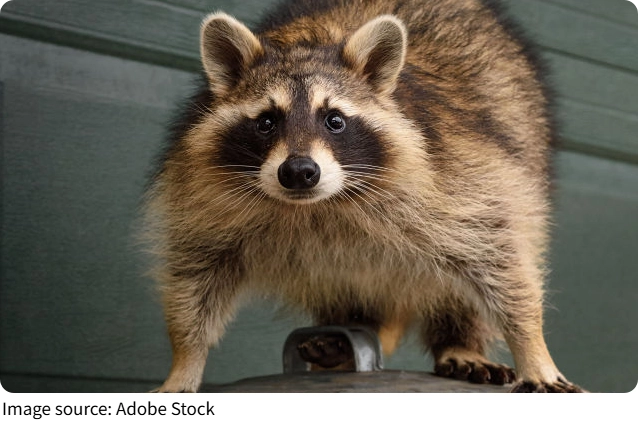
That's a raccoon, one of the most adaptable and clever animals in the wild.
Whether it's exploring urban landscapes or foraging in forests, raccoons are true survivors. Let's take a deeper look at the behaviors, traits, and fascinating facts about these nocturnal creatures.
What Makes the Raccoon So Clever?
Raccoons are often seen as the mischievous creatures of the animal kingdom. Their intelligence is their defining feature. They have dexterous paws, which they often use like hands, and an ability to manipulate objects in a way that few other animals can.
Opposable Thumbs: Raccoons have an almost human-like ability to grasp and manipulate objects. Their front paws can open latches, untie knots, and even turn door handles. This makes them skilled at getting into places you might think are secure. For instance, a raccoon can easily get into a garbage can or bird feeder that you thought was locked tight.
Problem-Solving Skills: Studies have shown that raccoons can solve puzzles and complete tasks that are often used to measure intelligence in primates. In one experiment, raccoons successfully unlocked a series of boxes to access food, demonstrating their problem-solving abilities.
Exploration Through "Hand" Movements: One of the raccoon's most iconic behaviors is the so-called "dousing" or "washing" of their food. While they are not actually washing their food like we do, raccoons dip their food in water or "paw" at it as if to inspect it. This behavior is likely a result of their natural curiosity and need to interact with objects before consuming them.
Raccoons and Their Urban Adaptation
While raccoons are traditionally wild creatures, they have shown an incredible ability to adapt to urban environments. In fact, it's in cities where they often thrive.
Adaptability to Human Habitats: Urban areas provide an abundant food supply, from overflowing garbage cans to pet food left outside, making it an ideal place for raccoons to settle. These animals are master scavengers, willing to rummage through trash bins, recycle bins, or even buildings for food.
Nighttime Creatures: Raccoons are primarily nocturnal, which allows them to avoid human activity and stay safe while searching for food. They have adapted to city life by becoming even more secretive and agile, using the cover of night to explore their surroundings undetected.
Use of Urban Infrastructure: Raccoons are excellent climbers, and they've adapted their climbing skills to urban landscapes. They are often seen scaling buildings, utility poles, and fences to access food or find shelter in attics and basements. Some even take refuge in sewer systems, which are an ideal hiding spot and offer easy access to food sources.
Raccoon Communication and Social Behavior
Despite their solitary reputation, raccoons do have some social behaviors and methods of communication that are worth noting.
Vocalizations and Sounds: Raccoons use a variety of vocalizations to communicate with each other. They make chattering, hissing, and growling sounds to warn off intruders, signal distress, or communicate with their young. These vocalizations can be heard especially during mating season or in areas where raccoon families live close together.
Body Language: Raccoons also communicate through body language, particularly through tail movements. A raised tail often signals alertness, while a lowered tail indicates that the raccoon is relaxed or comfortable in its environment. Their body posture can convey a range of emotions, from curiosity to aggression.
Family Units: While mostly solitary, raccoons do have family structures. Mothers raise their young in dens, and young raccoons remain with their mothers for several months before becoming independent. Raccoons are highly protective of their young and will fiercely defend their territory if they feel it is threatened.
Raccoon Diet and Feeding Habits
Raccoons are omnivores, which means their diet is varied and includes both plant and animal matter. This flexibility is one of the reasons they can thrive in such diverse environments, from forests to urban areas.
Opportunistic Feeders: Raccoons are opportunistic feeders, meaning they will eat whatever is available. Their diet can include fruits, nuts, seeds, insects, small animals, and even human food scraps. This varied diet allows them to adapt to changes in their environment and take advantage of available resources.
Foraging Techniques: Their ability to find food in almost any situation is remarkable. In the wild, raccoons forage through the underbrush, digging up insects or small vertebrates. In cities, they scavenge from trash bins, dumpsters, and even pet bowls. Their cleverness allows them to outsmart other animals and gain access to food sources that other creatures may miss.
Seasonal Feeding Patterns: Raccoons will vary their feeding habits depending on the time of year. In the fall, they focus on eating as much as possible to build up energy stores for winter. In the winter months, raccoons typically enter a period of torpor (a form of hibernation), where their activity slows down, but they don't truly hibernate like some other mammals.
Raccoon Conservation and Human Interactions
Though raccoons are not currently endangered and are widespread across North America, their interaction with humans has led to both positive and negative consequences.
Urban Wildlife Conflicts: As raccoons become more accustomed to urban environments, they often come into conflict with humans. They may nest in attics or chew through wires, causing damage to property. They are also known to carry diseases such as rabies and leptospirosis, which can pose health risks to both humans and pets.
Conservation Efforts: In some regions, raccoon populations have become too large, leading to efforts to control their numbers through relocation or managed hunting. While they are not endangered, ensuring they have the necessary habitats to thrive in the wild without overwhelming urban spaces is crucial.
Reflecting on the Raccoon's Resilience
Raccoons are incredibly resilient creatures that have adapted to thrive in some of the most challenging environments, from dense forests to busy city streets. Their intelligence, adaptability, and ability to problem-solve are traits that make them stand out in the animal kingdom.
Whether you love them for their curious nature or find them frustrating for their trash raids, it's impossible to ignore the raccoon's impact on both natural and urban ecosystems. So, the next time you spot a raccoon, take a moment to appreciate the remarkable survival skills they've developed in their quest to live alongside us.